
Building the Future: How EVCS Are Powering Sustainable Transportation Infrastructure
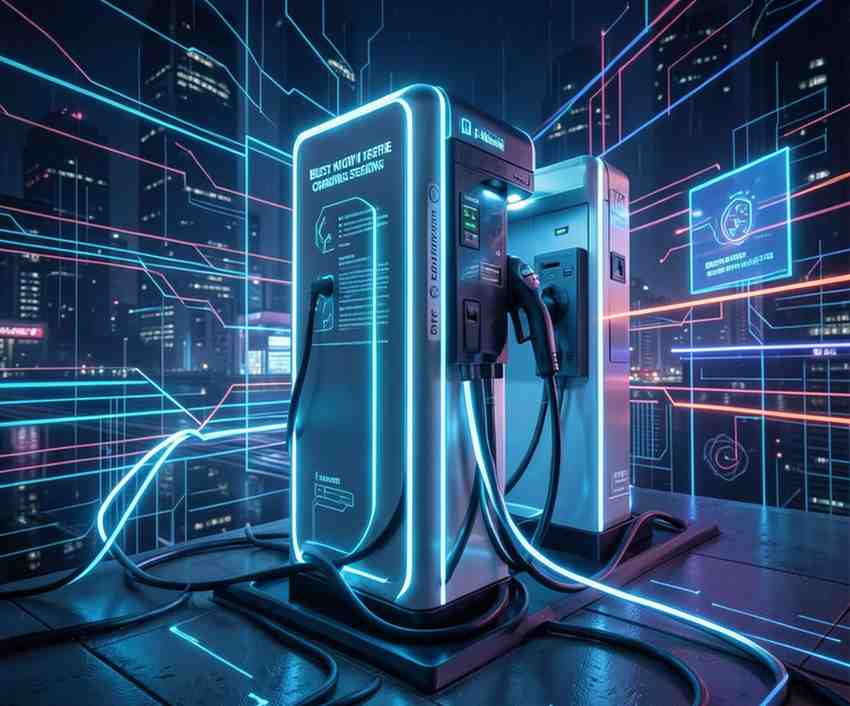
Electric vehicles are no longer “the future” — they are the present. With governments, businesses, and individuals rapidly adopting EVs, the demand for Electric Vehicle Charging Stations (EVCS) is rising at an unprecedented rate. But installing a charger is only one part of the story. Behind every reliable EV charging station lies detailed infrastructure design, electrical planning, civil works, and structural engineering that ensure long-term performance.
Whether you’re a property developer, infrastructure planner, or business owner, here are 12 essential facts about EVCS that most people don’t realize.
EVCS design isn’t as simple as adding a plug point. Fast chargers, especially DC fast charging stations, can demand as much power as a small commercial building. Proper electrical load calculations, transformer capacity checks, and power distribution planning are crucial to avoid grid overload and unexpected shutdowns.
Understanding charging levels is critical for determining infrastructure requirements:
Each level requires different cable sizes, switchgear, protection systems, and space planning, making engineering-led design essential.
An EVCS is not just equipment; it’s a complete site engineering project. Traffic flow, vehicle turning radius, parking layout, and pedestrian safety must be considered. Poor layout design leads to congestion, inefficient vehicle movement, and reduced user satisfaction.
Charging stations often include canopies, equipment pedestals, cable trays, and protective bollards. These require structural stability analysis to withstand wind loads, impact forces, and environmental conditions. Weak foundations or poorly designed supports can lead to equipment damage and pose safety risks.
Improper cable routing causes maintenance issues and safety hazards. Trenching layouts, underground ducting, and structured cable tray systems must be carefully planned to ensure durability, accessibility, and protection from external damage.
EV adoption is accelerating. Stations designed only for current demand may be insufficient within a few years. Smart infrastructure planning includes:
Future-proof EVCS infrastructure reduces expansion costs and avoids repeated civil work.
High-power chargers generate significant heat. Without proper spacing, ventilation, and equipment placement, the life of components is reduced. Thermal management planning improves safety, reliability, and operational lifespan.
From drainage systems to equipment plinths and surface finishing, civil design forms the base of EVCS projects. Water stagnation, soil settlement, or poor compaction can damage electrical systems and create safety hazards.
EV charging infrastructure must comply with electrical safety standards, grounding systems, fire protection norms, and installation guidelines. Non-compliance can lead to legal issues, shutdowns, and serious safety risks.
Common EVCS design mistakes include:
Engineering-focused infrastructure design minimizes failures and improves uptime.
A successful charging station project involves coordination between:
Integrated planning ensures all systems function together efficiently — not as isolated components.
Modern EV charging station infrastructure design relies heavily on CAD drawings and 3D modeling to visualize layouts, cable routing, equipment placement, and space utilization. This reduces construction errors and improves execution speed. Professional engineering support services, such as those offered through specialized EV charging station infrastructure design solutions, help streamline this process from concept to implementation.
While chargers get the spotlight, infrastructure engineering determines performance, safety, and scalability. Proper EVCS design ensures:
✔ Reliable power supply
✔ Safe structural support
✔ Efficient vehicle movement
✔ Reduced maintenance costs
✔ Long-term operational success
Organizations investing in EV charging projects must prioritize engineering-driven infrastructure planning rather than focusing only on hardware installation.
The EV revolution is transforming transportation, but its success depends on robust, well-engineered charging infrastructure. As cities, highways, commercial hubs, and residential developments expand their EV networks, working with specialists in EV charging station infrastructure design becomes essential to build systems that are safe, scalable, and future-ready.
This is where engineering-focused partners like ASE Structure Design play a crucial role — delivering detailed planning, CAD-driven layouts, electrical load considerations, and civil and structural coordination that ensure EVCS projects perform reliably from day one and continue to support future expansion.
Because in EV infrastructure, smart engineering today prevents operational problems tomorrow.
WhatsApp Us