
In-House Design Team vs Outsourced Telecom Engineering: Which Is Better?
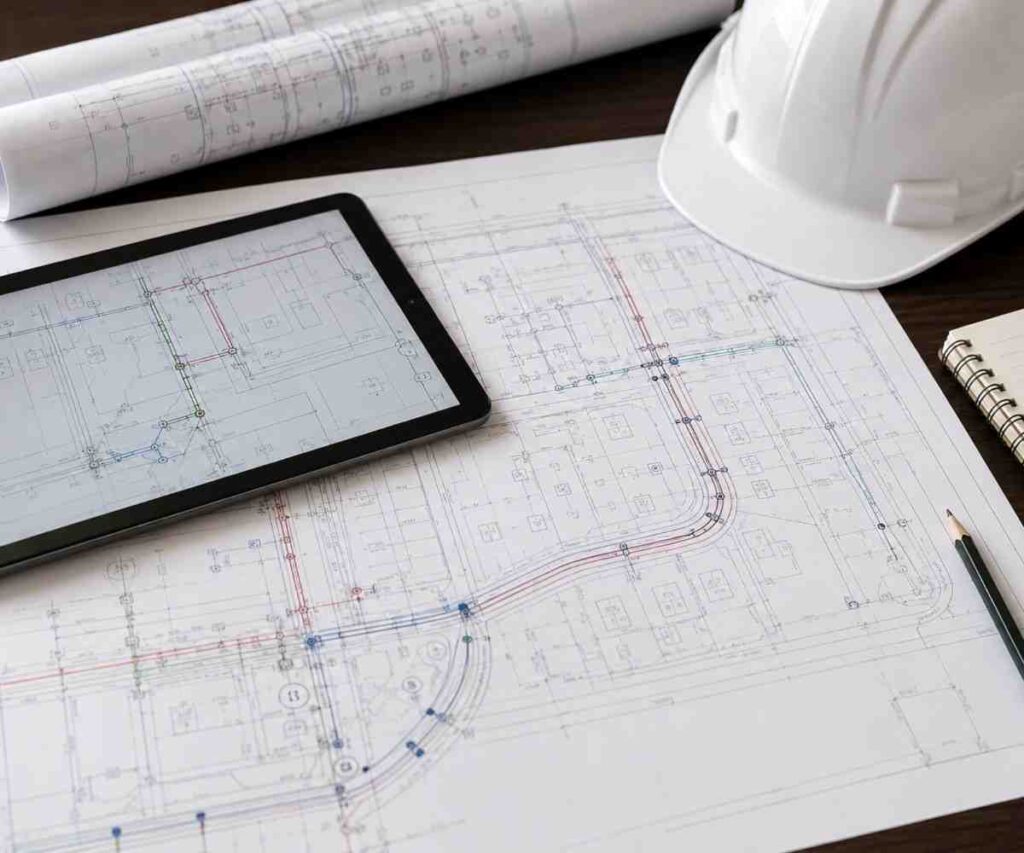
If changes are made during construction, continuing to follow the original blueprint can lead to confusion. As-built drawings address this by providing final, updated versions of design blueprints that reflect what was actually built, not just what was planned.
It is rare for telecom and Fiber projects to proceed exactly as planned. Field conditions, subsurface utilities, topography problems, and real-time judgments are all common sources of deviations. All changes are captured in as-built drawings, which precisely describe wire routes, splice points, conduit courses, and equipment locations. Recent market insights indicate that verified cable routes, splice locations, and infrastructure layouts necessary for operations and compliance are included in as-built documentation.
Think of as-built drawings as the “Google Maps” of your network infrastructure. Without them, technicians and engineers are essentially guessing. With them, every detail – from Fiber depth to cabinet location – is precisely recorded. That level of accuracy is not just helpful; it’s foundational for long-term network success.
At first glance, design drawings and as-built drawings might look nearly identical. But they serve entirely different purposes—and confusing the two can lead to serious operational problems.
Design drawings represent the intended plan. They serve as a guide for engineers and contractors and are made prior to the start of construction. Deviations are unavoidable once the concept is put into action, though. At this point, as-built drawings take over, capturing the actual installed conditions, including all modifications made during construction.
Here’s a simple comparison:
Aspect | Design Drawings | As-Built Drawings |
Purpose | Plan the project | Record actual construction |
Timing | Before construction | After completion |
Accuracy | Theoretical | Field-verified |
Use Case | Execution | Maintenance & operations |
In telecom, this distinction is essential. Imagine debugging a Fiber issue with out-of-date design drawings—it’s like attempting to find a destination on an old map with changing routes. By removing this lack of clarity, as-built drawings guarantee that all parties involved have access to the same precise data.
Fiber optic networks are incredibly precise systems. Even a small deviation in cable routing or splice location can disrupt signal performance. That’s why as-built drawings play a central role in Fiber network documentation.
These drawings provide a detailed record of the entire network, including Fiber routes, splice closures, handholes, ducts, and equipment. They are often integrated with GIS systems, allowing operators to visualize the network digitally and manage it efficiently.
Companies have documented tens of thousands of miles of Fiber networks in large-scale installations, highlighting the importance of precise as-built documentation for administration and scalability. Network operators would find it difficult to identify problems, plan expansions, or even confirm asset ownership without this degree of documentation.
Think about it this way: a Fiber network without as-built drawings is like a library without a catalog. Everything exists, but finding anything becomes painfully slow and inefficient.
It’s not just Fiber—wireless telecom infrastructure also relies heavily on as-built drawings. To ensure proper network performance and compliance, tower installations, antenna locations, and equipment configurations must be precisely documented.
For telecom facilities, as-built drawings usually contain information about equipment rack layouts, power systems, cable routing, and antenna orientation. These specifics are essential for doing audits, upgrading equipment, and diagnosing signal problems.
For instance, a network operator needs exact information on current installations if they wish to replace a tower with new antennas. Engineers would have to rely on manual inspections in the absence of as-built blueprints, which would increase time and expense.
Accurate as-built documentation is essential in a rapidly changing telecom environment with frequent updates and expansions.
Identifying the exact location of cables, especially underground, is a major challenge in Fiber installations. As-built drawings address this by providing accurate routing details, including depth, alignment, and deviations from the original plan.
This degree of precision is necessary to prevent unintentional damage while excavating. According to studies, inadequate as-built data is a significant contributor to infrastructure damage and utility strikes, which result in expensive repairs and service interruptions.
Imagine a construction team excavating without precise maps; they run the danger of damaging Fiber wires, which would result in interruptions for thousands of users. These dangers are greatly decreased using as-built drawings since each cable’s placement is precisely recorded.
In essence, as-built drawings act as a protective shield for your network, preventing costly mistakes and ensuring smooth operations.
Fiber networks are not just about cables—they involve complex connections, including splices, splitters, and distribution points. As-built drawings provide a detailed record of these elements, making it easier to track and manage them.
Without proper documentation, technicians might spend hours trying to locate a specific splice point or troubleshoot a connection issue. With as-built drawings, they can pinpoint the exact location within minutes.
This level of efficiency is crucial in telecom, where downtime directly impacts revenue and customer satisfaction. By ensuring accurate tracking of network components, as-built drawings help operators maintain high service reliability and performance.
Maintenance is where as-built drawings truly prove their value. When something goes wrong—whether it’s a Fiber cut or equipment failure—technicians rely on these drawings to diagnose and fix the issue.
Accurate as-built documentation allows maintenance teams to identify problem areas quickly, reducing downtime and improving response times. According to industry insights, these drawings act as a “detailed map” that enables efficient planning and execution of maintenance tasks.
Without them, troubleshooting becomes a guessing game. Teams may dig in the wrong location, inspect the wrong equipment, or waste valuable time searching for issues. As-built drawings eliminate this uncertainty, making maintenance faster and more effective.
Telecom projects must adhere to strict regulatory standards, especially in large-scale Fiber deployments. As-built drawings serve as official records that demonstrate compliance with design specifications, safety standards, and contractual requirements.
They are often required for project handover, audits, and government approvals. In some cases, missing or inaccurate as-built documentation can lead to penalties or project delays.
Think of them as legal proof of what was built. If disputes arise, these drawings provide clear evidence, protecting both contractors and clients.
Let’s talk money – because this is where as-built drawings make a huge impact. Poor documentation can lead to rework, delays, and operational inefficiencies, all of which increase costs.
Research indicates that inaccuracies in construction documentation can add 10–20% to project costs due to rework and delays. That’s a significant margin, especially in large telecom projects.
By ensuring accurate documentation, as-built drawings help reduce risks, prevent costly mistakes, and optimize project budgets. They’re not just a technical requirement—they’re a financial safeguard.
When as-built drawings are missing or inaccurate, the consequences can be severe. Network outages become harder to diagnose, repairs take longer, and service reliability suffers.
Imagine trying to fix a Fiber cut without knowing the exact cable route. Technicians might spend hours searching, leading to prolonged downtime and frustrated customers.
In today’s hyper-connected world, even a few minutes of downtime can have significant business impacts. Accurate as-built drawings minimize these risks by providing clear, reliable information.
Poor documentation doesn’t just affect maintenance—it also increases operational costs over time. Without accurate records, every repair, upgrade, or expansion becomes more complex and time-consuming.
Technicians may need to conduct additional surveys, use trial-and-error methods, or even redo work. All of this adds up, increasing the overall cost of network operations.
In contrast, well-maintained as-built drawings streamline processes, reduce inefficiencies, and improve overall productivity.
The telecom industry is rapidly moving toward digital as-built documentation. Instead of relying on paper drawings, companies now use GIS-based systems to store and manage data.
These systems allow real-time updates, ensuring that any changes made in the field are immediately reflected in the documentation. This level of accuracy is crucial for modern networks, where changes happen frequently.
Digital systems also enable better collaboration, allowing multiple teams to access and update data simultaneously.
Accuracy is everything in telecom. That’s why modern as-built drawings often incorporate GPS and survey data to ensure precise measurements.
Field engineers use advanced tools to capture coordinates, depths, and alignments, creating highly accurate documentation. This data is then integrated into GIS systems, providing a complete and reliable network map.
The result? A network that’s not just built—but fully understood.
Creating accurate as-built drawings starts in the field. Engineers must verify every detail, from cable routes to equipment placements, ensuring that the documentation reflects reality.
This process often involves surveys, measurements, and on-site inspections. Skipping this step can lead to inaccuracies that affect the entire network.
Consistency is key. Standardized formats, symbols, and documentation practices ensure that as-built drawings are easy to understand and use.
Regular quality checks are also essential. By reviewing and validating data, teams can identify and correct errors before they become costly problems.
The future of as-built drawings is digital, automated, and intelligent. Technologies like AI and BIM are transforming how documentation is created and managed.
AI can analyse data, detect inconsistencies, and even predict potential issues. BIM integrates design and construction data, providing a comprehensive view of the project lifecycle.
Smart mapping systems are taking as-built documentation to the next level. These systems provide real-time insights, enabling operators to monitor and manage networks more effectively.
As telecom networks continue to grow, these innovations will play a crucial role in ensuring accuracy, efficiency, and scalability.
As-built drawings are the backbone of telecom and Fiber projects. They bridge the gap between design and reality, providing a clear, accurate record of what has been built. From improving maintenance efficiency to ensuring regulatory compliance and reducing costs, their importance cannot be overstated.
In a world where connectivity is critical, accurate documentation is what keeps networks running smoothly. Without it, even the most advanced infrastructure can become difficult to manage. With it, operators gain clarity, control, and confidence.
As-built drawings are final updated drawings that reflect the actual installed telecom or Fiber infrastructure after construction. They include real cable routes, splice points, conduit paths, equipment locations, and field modifications.
As-built drawings help telecom operators maintain accurate network records, reduce downtime, improve maintenance efficiency, and ensure regulatory compliance. They also simplify troubleshooting and future upgrades.
Design drawings show the planned network layout before construction, while as-built drawings document the actual installation after project completion, including any field changes or deviations.
Fiber networks require precise documentation because even small routing changes can impact performance. As-built drawings accurately record cable routes, splice locations, ducts, and equipment for efficient operations and maintenance.
Telecom as-built drawings typically include cable routing, conduit layouts, splice closures, handholes, tower details, antenna positions, equipment locations, rack layouts, and power systems.
As-built drawings should be updated whenever network changes occur, such as cable rerouting, equipment replacement, tower modifications, or infrastructure expansion.
WhatsApp Us