
Structural Analysis of Telecommunications Towers: Why It Matters More Than You Think
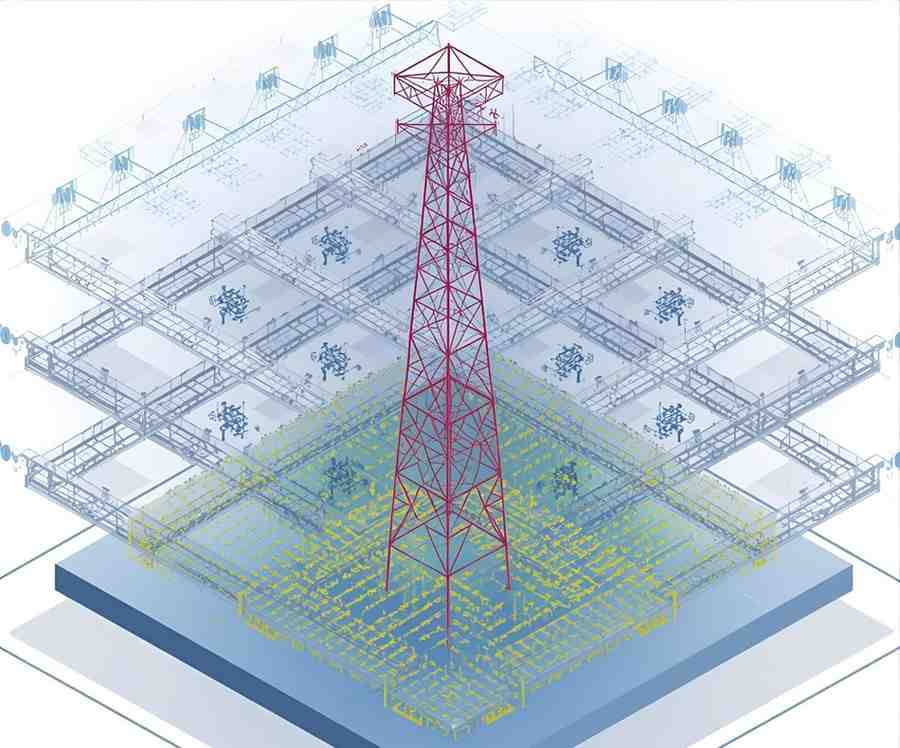
As the telecommunications industry moves toward 5G, fiber densification, and hyper-connected networks, the need for accurate, efficient, error-free infrastructure design has grown significantly. Telecom infrastructure, including ground-based towers, rooftop installations, small cells, and fiber networks, requires careful planning and coordination among engineering disciplines. Mistakes at the design stage can cause structural problems, installation delays, budget overruns, and operational inefficiencies.
To tackle these challenges, Building Information Modeling (BIM) has become essential. At ASE Structure Design, BIM plays a key role in achieving high-quality designs. It enables unmatched accuracy, coordination, and efficiency throughout telecom infrastructure projects. By combining data-driven insights with 3D modeling, BIM greatly improves the quality and dependability of every design output.
BIM is more than just a 3D modeling tool; it is a digital platform that brings together geometry, data, and workflows from multiple disciplines. In telecom infrastructure, this combined environment streamlines the planning and execution of:
By providing a single source of truth, BIM ensures that everyone involved—from RF engineers and structural designers to project managers and installation teams—works with accurate, fully coordinated information.
Traditional 2D drawings often do not capture the spatial constraints, equipment interactions, and structural complexities of telecom sites. BIM addresses these limitations through high-quality 3D visualization, enhancing clarity and precision.
Benefits of BIM-enabled visualization include:
At ASE Structure Design, 3D BIM models are vital for validating design intent and ensuring that each element meets technical and structural requirements before execution.
Telecom infrastructure design involves many components that must work together—mechanical systems, electrical conduits, RF equipment, structural frames, and more. When designed separately, clashes are unavoidable and costly.
BIM’s intelligent clash detection features spot potential conflicts early in the design process.
Common issues detected include:
By ensuring design coordination upfront, ASE Structure Design significantly cuts down on discrepancies in the field, installation delays, and rework costs.
Accurate material estimation is crucial, especially in large-scale or multi-site telecom deployments. Manual estimations or 2D-based quantity take-offs often lead to differences that affect budgets and procurement.
BIM allows for automated and precise quantity extraction directly from the model.
Advantages include:
ASE Structure Design uses BIM-based QTO to provide clear, data-supported estimates that help clients manage costs effectively.
Telecom infrastructure is sensitive to environmental forces and equipment loads. Any miscalculations can jeopardize safety, stability, and long-term performance.
BIM supports data-driven structural modeling that incorporates wind load, seismic conditions, equipment weights, and material performance—all within one digital environment.
Key structural advantages include:
ASE Structure Design combines BIM with advanced structural engineering methods to deliver strong and compliant designs.
Telecom projects feature various stakeholders and multiple design revisions. Without a centralized system, teams frequently work from outdated drawings, leading to inconsistencies.
BIM offers a single platform where updates are synchronized and accessible in real-time.
Collaboration benefits include:
This integrated approach allows ASE Structure Design to deliver coordinated and error-free project results across all telecom areas.
Telecom infrastructure needs ongoing maintenance and periodic upgrades. Having accurate as-built documentation is essential for smooth operations.
BIM produces detailed digital as-built models that reflect actual site conditions.
Advantages of BIM-based as-builts include:
ASE Structure Design provides clients with precise, data-rich as-built models that support long-term operational efficiency.
Large telecom operators often deploy hundreds of sites across regions. Keeping consistency across these deployments is tough with traditional methods.
BIM allows for standard templates, parametric modeling, and automated workflows.
This ensures:
ASE Structure Design’s BIM-focused approach is especially beneficial for clients handling high-volume deployments.
Rework is a major cause of cost increases in telecom infrastructure. BIM cuts down on rework by allowing teams to solve design problems digitally instead of on-site.
Outcomes include:
Through BIM, ASE Structure Design ensures projects run smoothly from concept to completion.
BIM is changing the standards of accuracy, coordination, and efficiency in telecom infrastructure design. For ASE Structure Design, it provides a foundation for delivering high-quality, technically sound, and execution-ready telecom solutions. By incorporating strong capabilities like 3D visualization, clash detection, structural modeling, accurate QTO, and collaborative workflows, BIM ensures that every telecom project meets high standards of precision and reliability.
As telecom networks adapt to support new technologies, the demand for accuracy and efficiency will keep growing. With its BIM-driven design methods, ASE Structure Design remains a trusted partner for seamless, safe, and future-ready telecom infrastructure.
WhatsApp Us